When pain sticks around for months, your movement, sleep, and training start to shift around it. At first it feels manageable, but over time symptoms often worsen and stop responding to rest, stretching, or temporary pain relievers — especially with stairs, lifting, running, or sitting for long stretches.
That’s where shockwave therapy in Vancouver enters the picture. It’s applied to areas of persistent tissue irritation that haven’t responded to standard conservative care, and it’s commonly used in the management of chronic tendon issues, repetitive strain, plantar fasciitis, shoulder pain, tennis and golfer’s elbow, and other concerns associated with overuse or long-term irritation.
The aim is to support the body’s natural healing response in the affected tissue rather than just masking symptoms. For many patients, that can mean improvements in comfort, movement, and a more practical return to the activities that matter to them.
What Is Shockwave Therapy?
Shockwave therapy uses controlled acoustic waves to stimulate injured muscles, tendons, and other connective tissue — non-surgically and without needles or injections. These sound waves penetrate the affected area and are thought to encourage blood flow and local healing activity, which is particularly relevant for tissues like tendons that have limited blood supply and tend to heal slowly.
Shockwave therapy is commonly applied for presentations including:
- Tendon-related concerns (tendinopathy / tendonitis)
- Plantar fasciitis
- Achilles tendon concerns
- Tennis elbow and golfer’s elbow
- Rotator cuff and shoulder concerns
- Patellar tendon concerns
- Hip pain, including gluteal tendinopathy and lateral hip pain
- Chronic muscle tightness
At Foundation Body Lab, a typical course is 3–5 sessions, usually 15–30 minutes each depending on the area treated. Most patients combine shockwave with sports chiropractic care — movement assessment, manual therapy, and a targeted loading program — because that combination tends to produce better and more durable results than shockwave on its own.
Why Some Injuries Don’t Heal on Their Own
The body is built to heal, but certain tissue types and load patterns can slow that process down. Instead of recovering, the tissue stays irritated and fragile, and pain can linger for months.
This is a common pattern in repetitive strain and tendon-related issues. Areas like the Achilles, elbow, shoulder, plantar fascia, and gluteal tendons take repeated load during everyday movement, and that cumulative stress can outpace the body’s ability to repair.
Rest helps temporarily, but the symptoms usually return once activity does. It’s a familiar cycle for runners, gym-goers, hikers, and people with physically demanding jobs. Shockwave therapy is intended to help interrupt that cycle by stimulating the tissue itself.
Who Tends to Benefit Most
Shockwave therapy is most often considered for people whose long-term symptoms haven’t improved with standard conservative care — rest, stretching, massage, or medication. Runners, cyclists, racquet sport athletes, construction workers, and even desk-based workers all show up for treatment.
People who tend to benefit most are often dealing with:
- Pain lasting weeks or longer
- Stiffness with movement or exercise
- Pain that returns after activity
- Tenderness around tendons or joints
- Reduced strength or mobility
- Repeated flare-ups of the same injury
If symptoms are affecting your routine or performance and you’re noticing movement limitations, earlier assessment tends to be more useful than later — the longer a pattern persists, the more it can shape how you move.
Why It Works for Active Lifestyles
Active people put consistent demand on their bodies — training, sport, long shifts, hiking, running — and that repeated load creates real stress on muscles and tendons. Without enough recovery, small irritations can quietly turn into chronic issues.
Many of our patients want care that supports continued movement rather than forcing long periods of inactivity. Shockwave fits well into active routines: sessions are short, downtime is minimal, and the goal is to support healing at the source of the discomfort, not just blunt symptoms in the short term.
What a Session Feels Like
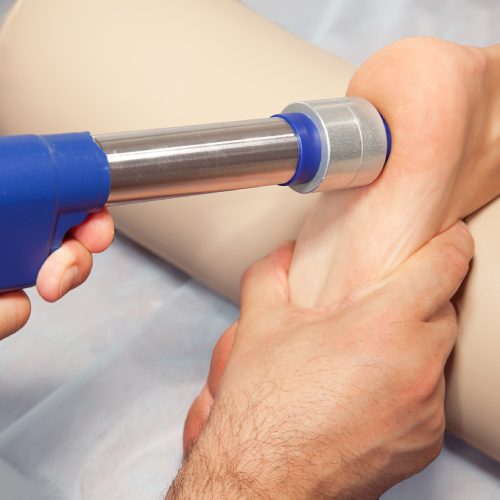
During a session, a handheld device delivers brief, controlled pulses to the affected area. The sensation depends on the condition being treated and how sensitive the tissue is.
Most patients describe it as a sharp tapping or pulsating feeling. Areas with more irritation or chronic tightness tend to feel more intense at first. Some mild soreness afterward is normal, especially during the first few sessions. As the tissue responds over the course of treatment, most patients find sessions become more comfortable.
Sessions are short — usually 15–30 minutes depending on the area, including assessment and setup. No needles, no injections, no downtime afterward.
What Results Can Look Like Over Time
Individual response varies. Some patients notice changes after the first few sessions, while others take longer depending on the nature of the issue. Long-standing conditions also tend to take more time to shift than newer ones.
Patients commonly report things like:
- Less pain with movement
- Less morning stiffness
- Better flexibility
- Improved strength and mobility
- An easier return to training
- Less discomfort during everyday activities
Results tend to be best supported when shockwave is paired with sports chiropractic care — assessment, manual therapy, and a progressive loading plan tailored to your case — rather than used in isolation.
When to Consider Shockwave Therapy
The most common pattern we see is people waiting too long to address chronic pain. Some keep training through it hoping it resolves; others back off completely and still don’t see much change months later.
Shockwave is worth considering when pain continues to interfere with exercise, work, or daily movement despite rest and standard conservative care. Tendon-related concerns in particular tend to respond well when addressed earlier, before compensations and altered movement patterns become entrenched.
What Makes It a Practical Option
Shockwave is non-surgical, doesn’t involve needles, and requires minimal downtime — sessions are short and focused. For patients dealing with stubborn tendon issues or chronic overuse concerns, that makes it a treatment option that fits into real-life schedules.
More importantly, the goal isn’t just short-term symptom relief. Shockwave is one part of a broader plan focused on movement, function, and getting back to the activities you care about.
Shockwave Therapy at Foundation Body Lab
If ongoing tendon, heel, elbow, shoulder, or hip pain has been limiting how you move, shockwave therapy may be a useful next step. Our team will assess where the issue is coming from, talk through whether shockwave is the right fit for your case, and build a plan that combines it with the sports chiropractic care that supports your longer-term goals.
When you’re ready, you can book online — we’ll walk through the rest from there.